
From Copenhagen to Berlin — A Weekend on the Road
Sometimes the best trips are the ones you don’t overthink.
Berlin had been sitting on our travel wish list for ages — close enough to reach by car, yet different enough to feel like a true escape. So one crisp Friday morning, we packed the car, queued our playlist, and hit the E20 toward Germany. The plan? Two days in Berlin, exploring as much history, art, and local flavor as possible before heading back to Copenhagen.
There’s something satisfying about road trips in Europe — crossing borders within hours, watching languages change on road signs, and feeling that slow shift in rhythm from one country to another. Denmark’s calm efficiency gave way to Germany’s industrial energy, and as we cruised past wind turbines and open fields, the anticipation grew.
The Road Trip South: Through Odense and Hamburg
We made our first stop in Odense, Denmark’s third-largest city and the birthplace of Hans Christian Andersen. Even though it was a brief break, Odense always feels like stepping into a storybook. Its pastel-colored houses and cobblestone lanes are the kind of quiet charm that contrasts perfectly with Berlin’s urban chaos.
After a quick coffee and pastry (Danes do cinnamon rolls better than anyone), we were back on the motorway heading for Hamburg.
Hamburg is often underrated, but it’s one of those cities that rewards even the shortest detour. The industrial port city feels alive — cranes, waterways, and brick warehouses giving it an edge that hints at its trading history. We parked near the Elbe River, stretched our legs, and grabbed lunch by the harbor. Watching the ships go by was a reminder that travel doesn’t have to be rushed; sometimes the in-between moments are just as memorable as the destination.
By late afternoon, the road signs began to point toward Berlin, and that familiar sense of excitement hit — arriving in a city that’s been rebuilt, reinvented, and reborn more times than most.
Arriving in Berlin: First Impressions
The first thing you notice about Berlin is its scale. It’s sprawling but organized, chaotic yet somehow calm. The city wears its history openly — fragments of the Wall standing beside modern glass towers, memorials woven into public spaces, and graffiti that reads like street poetry.
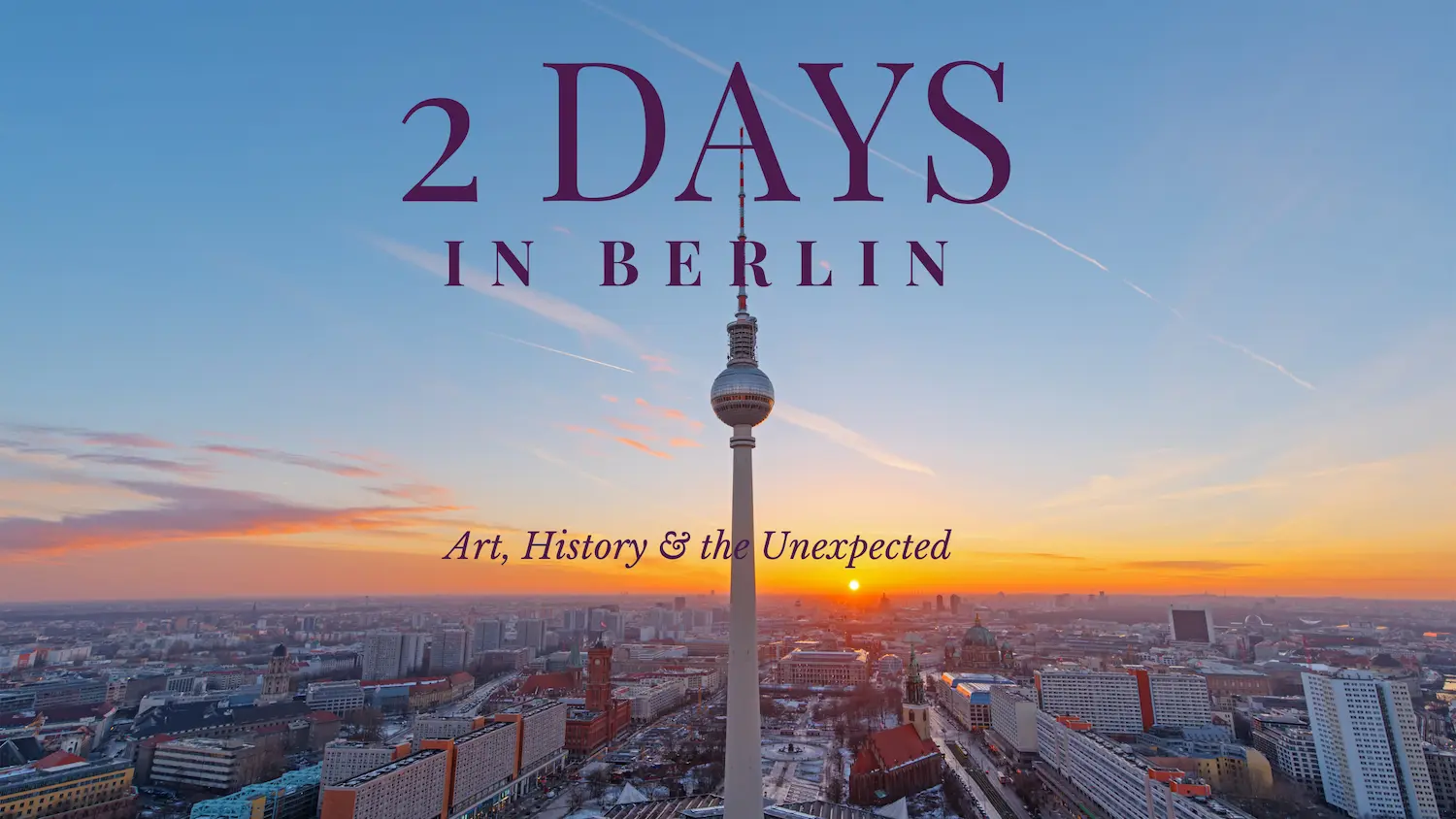
Driving through Mitte, we caught glimpses of the TV Tower, Museum Island, and tree-lined boulevards that seemed to stretch forever. Despite its size, Berlin has a rhythm that feels approachable. It’s a city where no one’s in a hurry, but everyone’s creating something.
We checked into a small boutique hotel in Friedrichshain — close enough to the action, but tucked away from the crowds. As the evening settled in, we took a short walk to grab dinner, soaking in that first-night-in-a-new-city buzz. Berlin doesn’t ease you in — it embraces you, noise and all.
Day 1: Berlin’s Icons — Where History Meets Now
Morning: The Brandenburg Gate & Reichstag Dome
Our morning began with Berlin’s most recognizable landmark — the Brandenburg Gate. Standing beneath its neoclassical columns, it’s hard not to feel the weight of history. Once a symbol of division during the Cold War, it now represents unity and peace. Tourists mingled with locals, and street musicians filled the air with jazz and acoustic covers.
A short walk away, the Reichstag Building — home of the German Parliament — stands as another symbol of rebirth. We’d booked tickets in advance to visit the glass dome, designed by Norman Foster. Inside, a spiraling ramp leads to panoramic views of the city. From up there, Berlin stretches endlessly — a mix of old facades, new towers, and leafy parks breaking up the skyline.
Midday: The Holocaust Memorial & Checkpoint Charlie
Just across the street is the Memorial to the Murdered Jews of Europe, a haunting yet profoundly moving space made up of 2,711 concrete slabs. Walking through it feels disorienting, the blocks towering over you as the noise of the city fades. It’s one of those experiences that stays with you — simple, silent, and powerful.
For lunch, we grabbed currywurst from a street vendor — spicy, messy, and entirely satisfying. Berliners have perfected the art of quick, flavorful food, and currywurst is practically a rite of passage.
Afterward, we visited Checkpoint Charlie — the former border crossing between East and West Berlin. It’s undeniably touristy, but the Checkpoint Charlie Museum offers incredible insights into the stories of escape attempts and the creativity born out of desperation during the Cold War.
Afternoon: East Side Gallery & Kreuzberg
We spent the rest of the afternoon wandering through East Side Gallery — the world’s longest open-air art gallery. Once part of the Berlin Wall, it’s now covered in colorful murals that celebrate freedom and unity. Standing before the famous “Fraternal Kiss” mural between Brezhnev and Honecker, you realize how Berlin has turned its scars into art.
After the gallery, we explored Kreuzberg, one of Berlin’s most vibrant districts. The area bursts with life — multicultural, artistic, slightly rebellious. Cafés spill onto sidewalks, walls are blanketed with murals, and vintage shops sit next to Turkish bakeries. We stopped for coffee at a local spot where laptops, sketchbooks, and conversations about music filled every table.
Evening: Alexanderplatz, TV Tower & Nightlife
As the evening approached, we made our way to Fernsehturm Berlin (TV Tower). Standing at 368 meters, it dominates the skyline. From the top, we watched the city turn golden, then fade into twilight.
For dinner, we found a cozy restaurant in Hackescher Markt, one of Berlin’s most atmospheric neighborhoods. The mix of cobblestone streets, indie shops, and open-air bars made it feel like the perfect Berlin night.
Afterward, we dipped into Berlin’s nightlife — known worldwide for its creativity and energy. While we didn’t make it to the legendary clubs like Berghain, the smaller bars offered a slice of the city’s after-dark soul. There’s something about Berlin at night — it feels alive in every sense, unfiltered and endlessly intriguing.
Day 2: Museums, Street Art & Local Flavor
Morning: Museum Island
Day two started slower — and for good reason. Berlin is packed with culture, and the best place to immerse in it is Museum Island.
We visited the Pergamon Museum, home to the Ishtar Gate, an awe-inspiring relic from ancient Babylon. Even under renovation, the museum’s scale and storytelling are jaw-dropping. Next door, the Neues Museum hosts the iconic bust of Nefertiti — a reminder that Berlin’s treasures span millennia.
We spent hours there, wandering through marble halls and ancient artifacts before stopping for coffee along the river. The pace of the city changes here — tourists blend with students sketching, and musicians fill the air with soft acoustic sounds.
Afternoon: Prenzlauer Berg & Hidden Markets
In the afternoon, we explored Prenzlauer Berg, a neighborhood that feels effortlessly stylish. Once gritty, now full of design studios, bakeries, and leafy courtyards, it’s where Berlin’s creative crowd thrives.
We found a flea market tucked away in a small park — vintage cameras, vinyl records, and handmade crafts laid out under colorful tents. Even if you don’t buy anything, these markets are worth visiting for the atmosphere alone.
Lunch was at a vegan café with outdoor seating — another reminder that Berlin embraces every lifestyle. Between mouthfuls of avocado toast and oat lattes, we watched cyclists zip past and thought: this city might be busy, but it never feels rushed.
Evening: River Walk & Farewell Dinner
As our final evening rolled in, we wandered back toward the Spree River for one last sunset stroll. Street performers, couples, and travelers gathered along the banks, the golden light bouncing off the water.
Dinner was simple — pasta and wine at a family-run Italian restaurant near our hotel. It was one of those meals that felt perfectly unplanned.
Berlin doesn’t demand a schedule; it rewards curiosity. And that’s what makes it so magnetic — every alley, every mural, every café has a story waiting to be found.
The Drive Back: North Through Hamburg
On Monday morning, we started the journey back to Copenhagen, tired but content. The drive north felt faster, the highway smoother. We made another stop in Hamburg, this time for brunch near the Speicherstadt — the city’s historic warehouse district and a UNESCO World Heritage Site.
Crossing back into Denmark later that afternoon felt like closing a loop. What started as a quick weekend idea had turned into one of the most memorable short trips we’ve taken. Berlin had delivered everything we hoped for — history, creativity, food, and a reminder of how resilient cities (and people) can be.
Final Reflections: Why Berlin Is the Perfect 2-Day Escape
Berlin is a city of contrasts — old and new, polished and raw, loud and thoughtful. It’s the kind of place that refuses to be one thing, and that’s exactly why it works.
For travelers from Scandinavia or Northern Europe, Berlin makes for the perfect 2-day cultural getaway. It’s affordable, accessible, and endlessly fascinating. You can explore world-class museums by day, dance under neon lights by night, and still have time for a quiet coffee by the river the next morning.
Even after just two days, Berlin leaves a mark — a mix of inspiration, nostalgia, and curiosity that lingers long after you’ve driven away.
Travel Tips for Your Berlin Road Trip
- 🚗 Drive Time: Around 7–8 hours from Copenhagen
- 🛣️ Stops Worth Making: Odense (coffee), Hamburg (lunch and a walk by the harbor)
- 🏨 Where to Stay: Mitte or Friedrichshain for easy access to major attractions
- 🍴 Food to Try: Currywurst, schnitzel, döner kebab, and local craft beer
- 🎟️ Book Ahead: Reichstag Dome, TV Tower, and Museum Island tickets
- 🚲 Getting Around: Rent a bike or use Berlin’s efficient U-Bahn system
- 💡 Budget Tip: Most of Berlin’s best attractions (street art, memorials, public parks) are completely free!



0 Comments